When to use
Users cannot trust work they cannot preview.
Example scenario: Research agent drafts a 4-step market analysis plan before a 15-minute Deep Research run.
Variations
Common forms this pattern takes in production.
- Advisory
- Plan is shared for orientation but execution proceeds without explicit approval—common in chat reasoning.
- Contractual
- User must approve or edit the plan before compute-heavy or irreversible work begins—common in research and coding agents.
Anatomy
UI pieces that make this pattern recognizable.
- Goal restatement in user language
- Numbered or bulleted steps with scope estimates
- Risk or irreversibility flags
- Primary CTAs: Proceed, Edit plan, Do it myself
Guidance
Do
- Write plans for humans, not engineers
- Keep plans short enough to scan in under 30 seconds
- Explain what will happen now; save detailed reasoning for later
Avoid
- Do not dump raw tool calls or chain-of-thought as the plan
- Do not auto-start long jobs without an explicit start action
Limitations
When this pattern adds friction or fails to help.
- Adds friction for fast, low-stakes tasks where users already know the scope
- Plans can become stale if the user edits mid-run without versioning
- Advisory plans shown only in stream-of-thought may be ignored under time pressure
Build notes
Implementation hints for engineers shipping the pattern.
- Store plan version when user edits before run
- For research agents, link each step to sources as they complete
Examples
Annotated screenshots from production products, with designer critique.
Google Gemini Deep Research
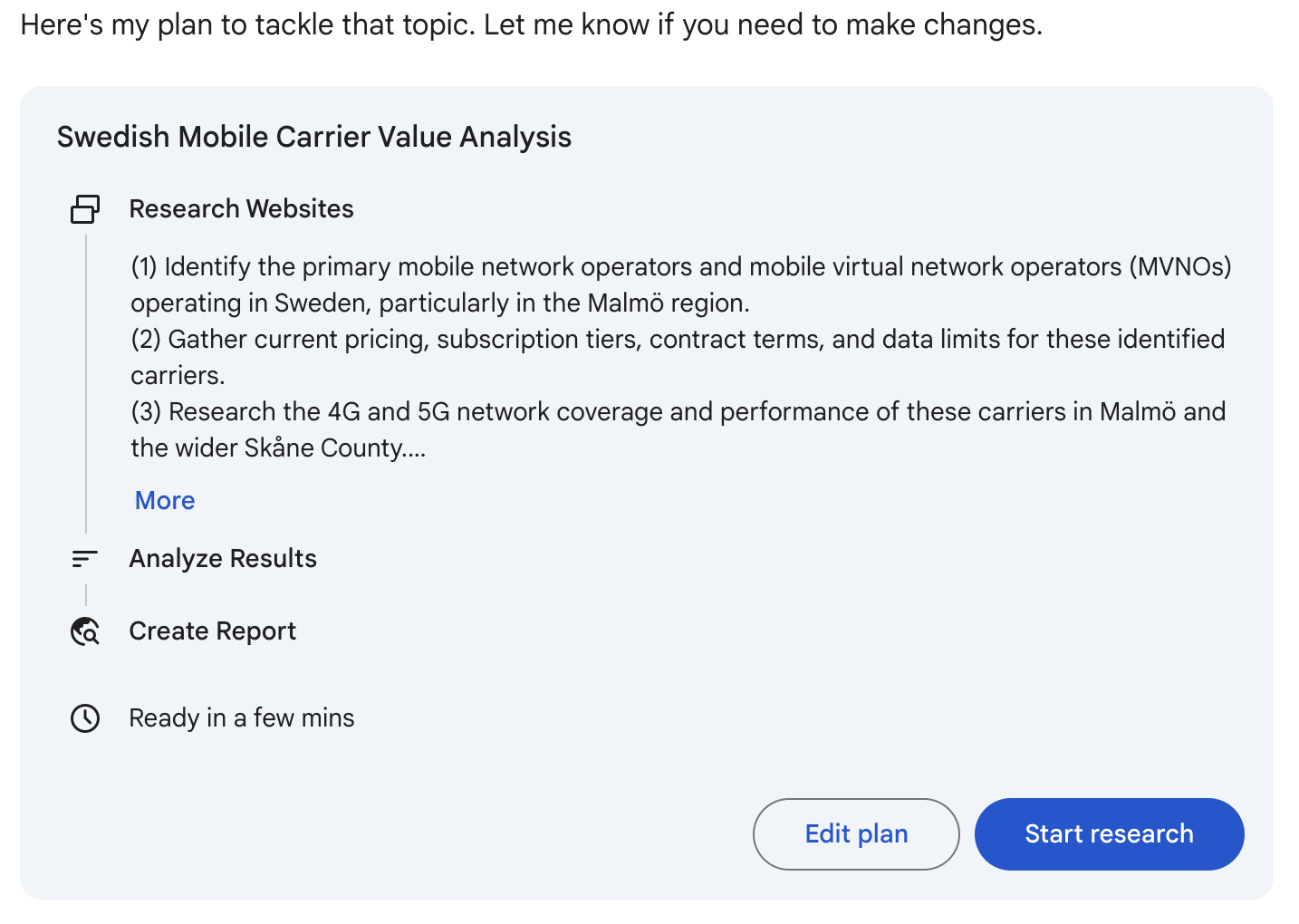
Editable research outline
Context
Gemini surfaces a research outline the user can adjust before the agent gathers sources and drafts a cited report—plan approval is part of the composer flow.
What works
- Plan reads as user-facing goals, not tool traces
- Editing reinforces shared intent before spend
What to improve
- Outline vs final report structure can diverge without explanation
- Mobile layouts compress step detail
Takeaway: Let users reshape the plan, not just approve a frozen script.
Mistral Le Chat
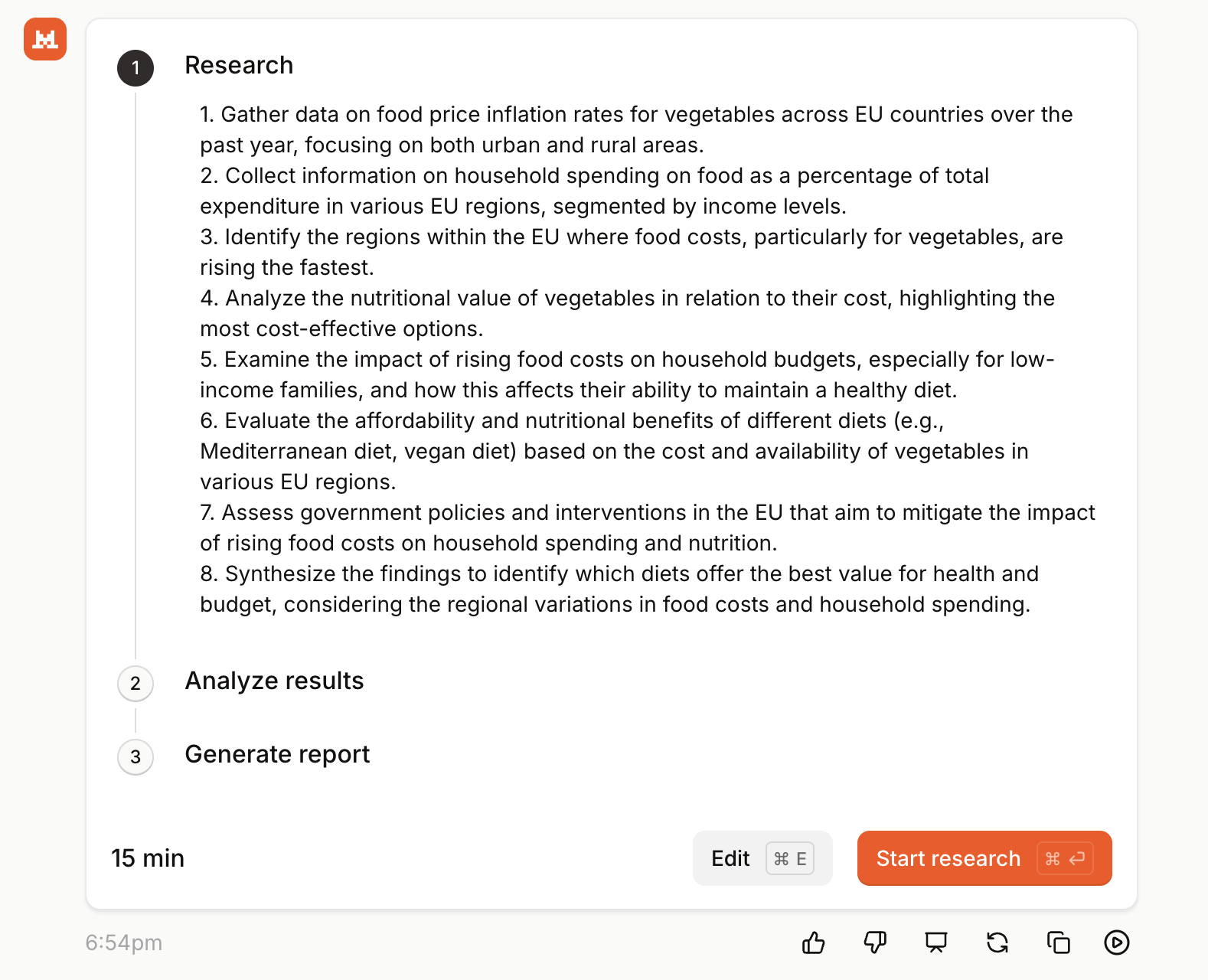
Deep research plan with time estimate
Context
Le Chat's Deep Research surfaces a three-phase plan—Research, Analyze results, Generate report—with expandable step detail, a duration estimate, and Edit / Start research actions before the agent runs.
What works
- Phased plan matches how users think about long research jobs
- Time estimate sets expectations before background work
- Edit + Start research pair mirrors category-leading research UIs
What to improve
- Collapsed later phases hide scope until users expand them
- Keyboard shortcuts for Edit/Start may be easy to miss
Takeaway: Intent preview is table stakes across research agents—Le Chat follows the same plan gate as frontier peers.
v0
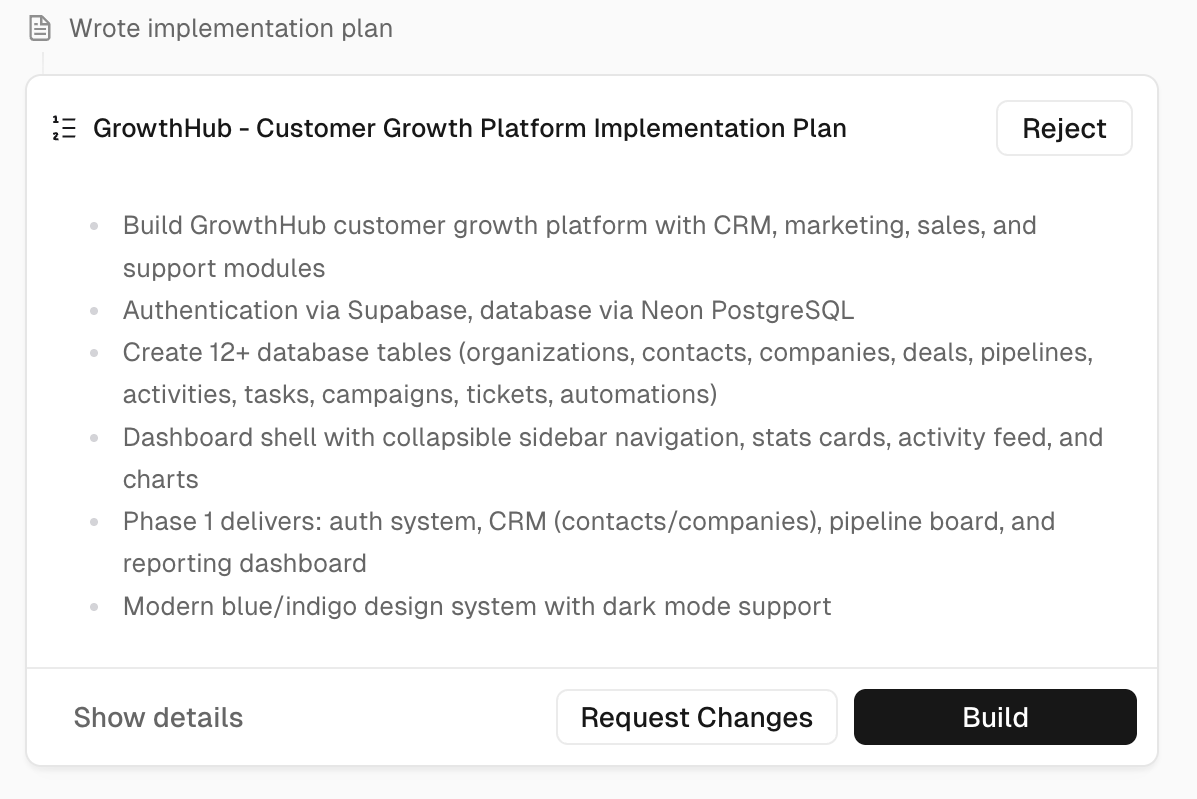
Build plan before generation
Context
v0 outlines what it will build before generating components—a contractual checkpoint before expensive codegen.
What works
- Connects open-ended intent to concrete build steps
- Gives users a chance to correct scope before tokens burn
What to improve
- Power users may want to skip planning on repeat tasks
- Plan fidelity to generated output needs visible tracking
Takeaway: Codegen agents benefit from the same plan gate as research agents when runs are costly.